
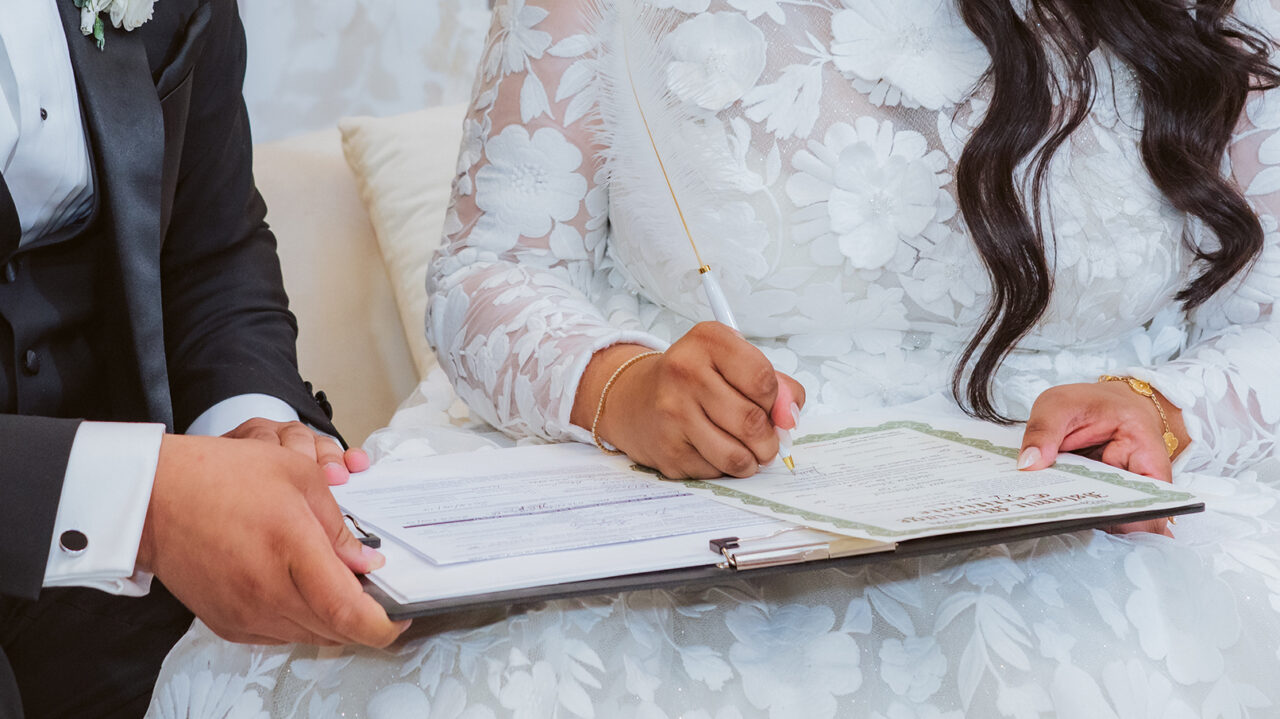
The Nikkah is the heart of a Muslim wedding. It is the moment two people formally enter a marriage with their families present, and it is often quieter and more intimate than the celebrations that surround it. Because it carries so much meaning, it deserves careful planning.
This guide covers the Nikkah best practices we would want every couple to know: the preparation behind the ceremony, the etiquette that keeps the room comfortable, and the small decisions that help the day unfold calmly. It is written for couples planning a Nikkah in Toronto and across the Greater Toronto Area, though most of it applies wherever you are marrying.
Start with the meaning, then plan around it
Before choosing a venue or a colour palette, sit down together and talk about what the Nikkah should feel like. Some couples want a small ceremony with immediate family. Others want a full hall with extended relatives and friends. Neither is more correct. What matters is that the ceremony reflects your values and your families’ traditions.
Requirements for a valid Nikkah can differ by school of thought and family custom, so speak with your imam early. Ask them directly what they need from you, who should be present, and how they conduct the ceremony. Hearing it from your officiant removes guesswork and avoids stressful surprises on the day. Having this conversation early is one of the simplest Nikkah best practices there is.
Nikkah best practices: the 5 core elements of the ceremony
Most Nikkah ceremonies include the same essential parts, even when the style differs from family to family.
- Mutual consent. The bride and groom each freely agree to the marriage. This is expressed during the ceremony, traditionally through the offer and acceptance.
- Mahr. This is the gift from the groom to the bride, agreed upon beforehand. Discuss it openly as a couple and with your families well before the ceremony, so the conversation is settled and unhurried.
- Witnesses. The number and requirements of witnesses vary by tradition, so confirm with your imam and choose people you trust who can be present throughout.
- The khutbah. The officiant usually delivers a short sermon about marriage, often followed by prayers for the couple.
- The marriage contract. Many couples sign a Nikah Nama. Read it carefully before signing, and keep a copy somewhere safe.
Take care of the legal side in Ontario
A Nikkah is a religious ceremony, and in Ontario a legally recognized marriage also involves civil requirements. Couples generally need a marriage licence, and the person who officiates must be authorized to solemnize marriages in the province.
Because rules and processes can change, check the current requirements on the Ontario government website, and ask your imam whether they are registered to perform legal marriages. Some couples sign their civil documents at the same ceremony, and others handle them separately. Whichever you choose, settle it weeks in advance so nothing is left to the last minute.
Choose a venue that suits the ceremony
The setting shapes the whole experience. A mosque, a banquet hall, a home, or a private garden can all work beautifully, and each brings its own considerations.
- Confirm with the venue that a religious ceremony is welcome and ask about any rules for decor, sound and photography.
- Think about seating. Many families prefer a layout that keeps everyone comfortable, and a thoughtful arrangement avoids awkward moments once guests arrive.
- Plan for quiet. The Nikkah is a moment for listening, so choose a space where the officiant can be heard clearly without competing noise.
- Look at the light. Natural light from large windows makes a ceremony feel warm and calm, and it also helps a great deal with photography.
Build a realistic timeline
One of the most overlooked Nikkah best practices is building in buffer time. Ceremonies often run late because several things need to happen in the right order, and a little buffer protects the mood of the entire day.
Arrive earlier than you think you need to. Allow time for the bride and groom to get ready, for family to settle, and for the officiant to meet with the couple beforehand. Share the schedule with your officiant, your photographer, your videographer and your families, so everyone is working from the same plan.
If your Nikkah is part of a larger celebration that also includes a Mehndi, Baraat or Walima, map out how much time separates each event. A rushed transition is one of the most common reasons couples feel they missed moments they had planned for.
Etiquette that keeps everyone comfortable
Good etiquette is mostly about consideration, and these Nikkah best practices for guests and families make a real difference.
Brief your guests. A short message ahead of time about the start time, modest dress expectations and any photography preferences prevents confusion. Ask guests to silence their phones during the ceremony and the khutbah.
Respect the space. If the ceremony takes place in a mosque or prayer hall, follow its customs around footwear, dress and where people may stand or sit.
Look after your elders. Make sure grandparents and older relatives have comfortable seating with a clear view, and assign a family member to look after them.
Decide on a plan for children. Little ones add warmth to a wedding, but a quiet ceremony is easier when someone is ready to step out with them if needed.
Nikkah best practices for photography and videography
A Nikkah is one of the most emotional parts of the wedding, and it happens only once. These are the choices that help your photographer and videographer capture it well without disturbing it.
Talk about photography with your imam and venue. Ask what is welcome during the ceremony, where the photographer and videographer may stand, and whether any moments should remain private. A good team will follow those guidelines closely and work unobtrusively.
Share the order of events. Knowing when the khutbah begins, when the Nikah Nama is signed and when the dua is offered lets the team position themselves ahead of time instead of moving around during quiet moments.
Think about sound. The words spoken during a Nikkah are the soul of the ceremony. Clear audio matters, so ask your videographer about microphone placement and let the officiant know in advance.
Include the details. The signing of the contract, the mahr, the hands in prayer, a grandparent’s expression and the first moments as a married couple are the images couples treasure years later. Give your team a short list of the people and moments that matter most to your family.
Keep the lighting in mind. Many ceremony spaces are softly lit. Experienced teams bring the right equipment for low light, but you can also help by choosing a time of day and a room with good natural light.
If you are looking for a team that understands cultural and religious ceremonies, you can explore our wedding photography in Toronto and our cinematic wedding videography, or browse our Muslim wedding portfolio to see how we approach ceremonies like these. For more recent ceremonies and behind the scenes moments, follow us on Instagram.
Prepare the small things in advance
A few quiet preparations are among the most practical Nikkah best practices, because they protect the calm of the day.
- Confirm the officiant’s name, contact number and arrival time.
- Gather the witnesses’ details and confirm that they are available.
- Agree on the mahr and write it down clearly.
- Prepare any documents you need to bring on the day.
- Assign a trusted family member to coordinate on the day, so you do not have to answer questions while you are getting ready.
- Keep a small kit nearby with essentials such as pins, tissues, water and snacks.
Nikkah best practices come down to a calm ceremony
The most helpful thing you can do is prepare enough that you can be present. When the paperwork is settled, the timeline is realistic and everyone knows their role, you are free to listen to the words being spoken, look at the person beside you and enjoy what is happening.
If you are planning a Nikkah in Toronto or the GTA and would like it documented with care, we would love to hear about your day. Contact us to schedule a complimentary consultation. You can also find recent work and updates on our Facebook page.
Frequently asked questions
How long does a Nikkah ceremony usually take?
Many ceremonies run between thirty minutes and an hour, depending on the khutbah, the number of guests and how the families choose to conduct it. Ask your imam for an estimate and add buffer time around it.
Do we need a marriage licence for a Nikkah in Ontario?
A Nikkah is a religious ceremony, and a legally recognized marriage in Ontario involves civil requirements, including a licence and an authorized officiant. Check the current rules with the Ontario government and confirm the details with your imam.
Can a photographer and videographer attend the Nikkah?
In most cases yes, though it depends on the venue and your officiant. Ask in advance what is welcome, then share those guidelines with your photography and videography team.
What should we discuss with our imam before the ceremony?
Cover the ceremony’s order and length, the witnesses, the mahr, the contract, photography preferences and anything specific to your family’s tradition.
How early should we start planning a Nikkah?
Nikkah best practices suggest beginning the conversation with your officiant and venue several months ahead, and booking your photographer and videographer as soon as your date is confirmed.


