
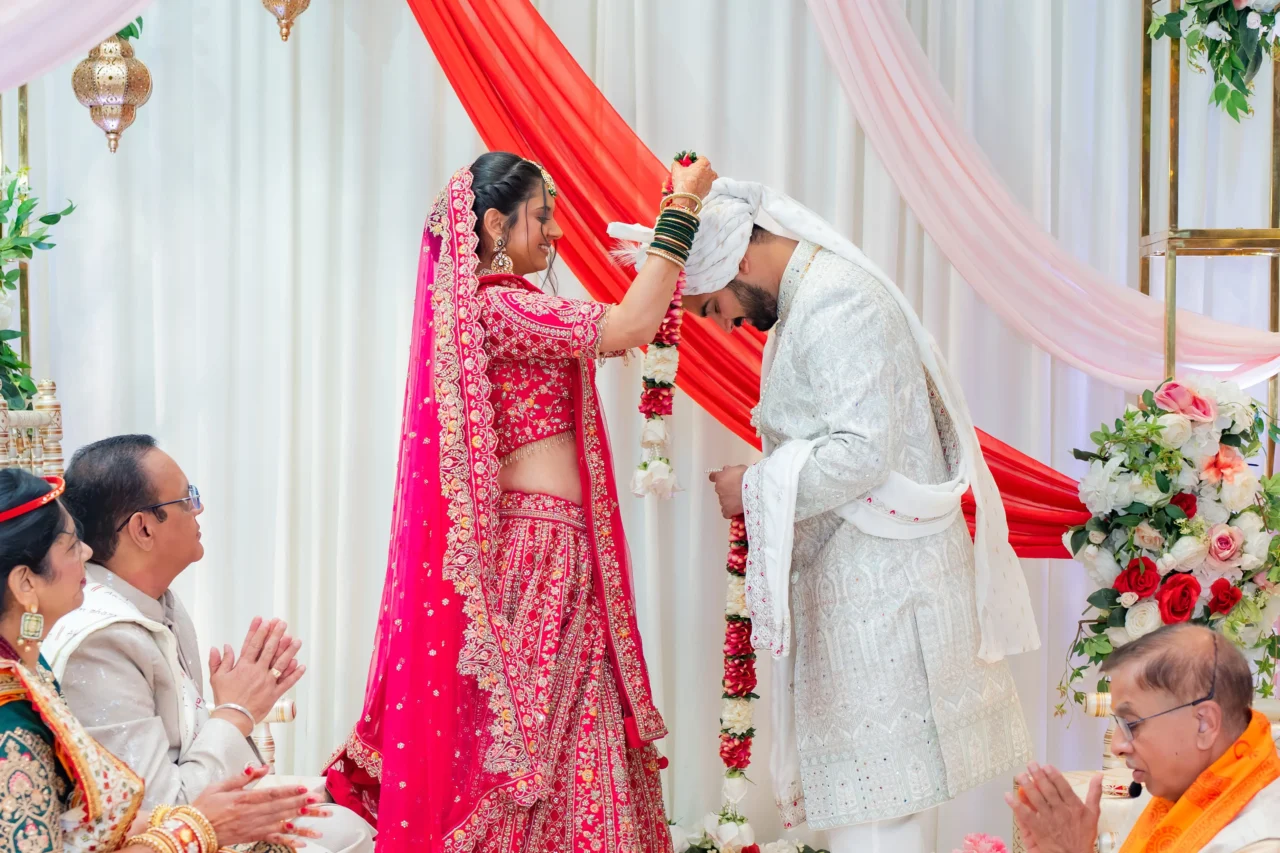
An Indian wedding is never a single event. It is a sequence of rituals, reunions and celebrations that unfolds over days, with music, colour and emotion at every turn. The art of capturing Indian weddings lies in honouring all of it, from the quiet moments before the ceremony to the loudest dance floor of the weekend.
This guide explores the art of capturing Indian weddings from the couple’s side of the camera. It covers how to plan coverage, which moments deserve your attention, and how to help your photographer and videographer work with your families rather than around them. It is written for couples planning in Toronto and across the Greater Toronto Area, though the ideas apply anywhere.
The art of capturing Indian weddings begins with understanding the events
Every family celebrates differently. A Punjabi Sikh wedding, a Gujarati Hindu wedding and a South Indian ceremony each carry their own rituals, clothing, music and timing. Before anything else, sit down with your families and write out the events you plan to hold and roughly what happens at each.
Common events include a Mehndi, a Haldi, a Sangeet, the Baraat and Milni, the main ceremony, the Vidaai and a reception. Some families add a Roka or engagement, a Jaago night, or a religious gathering beforehand. Not every couple holds all of these, and that is perfectly fine. What matters is that the team documenting your wedding knows which events are happening, where, and what each one means to your family.
Share this list early. A photographer or videographer who understands the order of your rituals can stand in the right place at the right time, instead of guessing.
The art of capturing Indian weddings: 7 moments that matter
These are the moments that most couples tell us they treasure years later. Use them as a starting point for your own list.
1. Getting ready. Quiet portraits of the bride’s jewellery, her lehenga or saree being prepared, the groom’s sherwani and the sehra being tied. These are calm, intimate images that set the tone for the entire story.
2. Mehndi and Haldi. Laughter, hands covered in henna, turmeric on cheeks, and cousins who cannot stop teasing. These events are playful, so coverage should be relaxed and candid rather than posed.
3. Sangeet. Choreographed dances, speeches from siblings and friends, and the energy of a full room. This is where video truly shines, because motion and sound carry the evening.
4. Baraat and Milni. The arrival of the groom’s family with music, dhol, and dancing is one of the most vivid parts of the wedding. The Milni, where the two families greet one another, is often full of emotion.
5. The ceremony. Whether it is the pheras around the sacred fire or the Laavan in a Sikh Anand Karaj, this is the heart of the day. It calls for patience, respect, and a good understanding of where the team can and cannot stand.
6. Vidaai. A farewell filled with tears, blessings, and long embraces. It is brief and unrepeatable, so everyone on your team should know when it is happening.
7. The reception. Grand entrances, first dance, speeches and the final celebrations. By now the room is relaxed, which usually leads to some of the most joyful images of the weekend.
Light, colour and detail in the art of capturing Indian weddings
Indian weddings are rich in colour, and handling it well is a craft in itself. Deep reds, saffron, emerald and gold can easily overwhelm a photograph if the exposure and white balance are not handled carefully. The goal is to keep skin tones natural while letting the clothing and decor keep their depth.
Light matters just as much. Banquet halls and mandaps are often softly lit, and ceremonies can happen in the evening. Experienced teams bring the right gear for low light and know how to shape existing light instead of flattening it with harsh flash. You can help by choosing venues with good natural light, especially for portraits, and by building a short window of quiet time for the couple’s portraits when the light is at its best.
Detail work is where the story gets its texture. Think of the bangles, the mehndi design, the mandap flowers, the pheras, the wedding invitations, and the shoes lined up by the door. These small images give a gallery its rhythm and remind you of how the day felt, not just how it looked.
Plan the family portraits with care
Family portraits are important at an Indian wedding, and they can also be the most stressful part of the day. Large extended families, relatives travelling from abroad, and tight timelines make this a place where a little planning goes a long way.
Write a list of the groupings you want, starting with the largest and moving to the smallest. Assign one trusted cousin or sibling to gather people for each group, because relatives will respond better to a familiar face than to a stranger holding a camera. Choose a location close to the ceremony or reception space, and set aside enough time so that no one feels rushed.
Also tell your photographer about anyone who needs special attention, such as grandparents, relatives with limited mobility, or family members who have come a long way.
Respect the ceremony and the space
The art of capturing Indian weddings depends on respect. Temples, gurdwaras, and ceremony spaces each have their own customs around footwear, head coverings, where people may sit, and where cameras may go. Ask your priest, granthi, or venue coordinator what is expected before the day, and share those guidelines with your team.
Good photographers and videographers work quietly during the ceremony. They move at the right moments, avoid blocking relatives, and stay out of the way during prayers. If there are moments you would prefer to keep private, say so in advance. A team that understands your boundaries will protect them.
Why photography and film belong together
Photography and videography capture different parts of an Indian wedding, and they are strongest when planned together. Photographs hold a single, perfect expression. Film holds the sound of a father’s voice, the music of the dhol, and the sequence of the rituals themselves.
This is why we believe the art of capturing Indian weddings is best served when both teams plan together. They can share the schedule, avoid standing in each other’s frames, and coordinate around the moments that matter most. You can explore our wedding photography in Toronto and our cinematic wedding videography to see how each service approaches a celebration like this. To see how we document these celebrations, browse our Indian wedding portfolio, or follow our recent work on Instagram.
Build a timeline that leaves room for the unexpected
Indian weddings rarely run exactly to schedule, and that is part of the charm. A realistic timeline protects the mood of the day and gives your team time to do their best work.
Allow extra time for getting ready, because hair, makeup, jewellery and dressing take longer than most people expect. Add buffer around the Baraat, since it depends on traffic, music and the energy of the crowd. Leave a gap between the ceremony and the reception for portraits and a short rest.
Share the schedule with everyone involved: your photographer, your videographer, your decorator, your DJ and a family member who can coordinate on the day. When everyone works from the same plan, your wedding feels calmer, and the images and film reflect that calm.
Prepare these small things in advance
A few quiet preparations make the difference between a day you manage and a day you enjoy.
- Write a list of events with dates, venues, and start times.
- Share a list of key family members and the groupings you want for portraits.
- Confirm the ceremony and venue rules for photography and videography.
- Tell your team about any rituals, songs or speeches you want captured clearly.
- Choose a family member who can answer questions on the day, so you do not have to.
- Keep a small kit nearby with safety pins, tissues, water, and snacks.
The art of capturing Indian weddings is really about presence
When the details are settled, and your team understands your families, you are free to be present. You can hug your grandparents, laugh with your cousins, and listen to the words being spoken, knowing that someone is paying attention to everything else. That is what a thoughtful approach to the art of capturing Indian weddings makes possible.
If you are planning an Indian wedding in Toronto or the GTA and would like it documented with care, we would love to hear about your celebration. Contact us to schedule a complimentary consultation. You can also find recent work and updates on our Facebook page.
Frequently asked questions
What is the art of capturing Indian weddings?
It is the practice of documenting the rituals, emotions, colour and scale of an Indian wedding with sensitivity to culture and family. It combines technical skill with an understanding of the events, the people, and the meaning behind each moment.
How many days of coverage should we plan for?
That depends on your events. Many couples choose coverage for the ceremony and reception, while others add the Mehndi, Haldi, and Sangeet. List your events first, then decide which ones matter most to your family.
Should we hire both a photographer and a videographer?
Many couples do, because the two capture different things. Photographs preserve individual expressions, while film preserves sound, movement, and the order of the rituals.
How do we help our team at a large family wedding?
Share a schedule, a list of important family members, and your portrait groupings ahead of time. A family member who can gather people for portraits makes a significant difference.
When should we book our photographer and videographer?
As soon as your date and venue are confirmed. Indian wedding dates often fall on popular weekends, so booking early gives you more choice.


